Post
Puzzle Toys: The Perfect Combination of Fun, Learning, and Brain Development
Jun
Puzzle Toys: The Perfect Combination of Fun, Learning, and Brain Development
Puzzle toys have remained one of the most effective educational and entertainment tools for children of all ages. These toys challenge the mind, encourage critical thinking, and provide rewarding experiences that support cognitive development. Whether in the form of jigsaw puzzles, shape sorters, brain teasers, or logic games, puzzle toys continue to be a favorite choice for parents and educators.
As children work through challenges and discover solutions, they build confidence and develop valuable skills. Puzzle toys transform learning into an enjoyable activity while helping children improve concentration, patience, and problem-solving abilities.
What Are Puzzle Toys?
Puzzle toys are toys designed to challenge the brain and encourage logical thinking. They require children to solve problems, recognize patterns, or assemble pieces into a complete structure.
These toys come in many forms, including traditional jigsaw puzzles, wooden puzzles, shape-matching games, maze toys, and advanced logic challenges.
Because puzzle toys can be adapted for different age groups, they remain popular from infancy through adulthood.
Why Puzzle Toys Are Important
Puzzle toys provide more than simple entertainment. They encourage active thinking and help children engage with challenges in meaningful ways.
Unlike passive forms of entertainment, puzzle-solving requires concentration and effort. Children must analyze information and develop strategies to achieve their goals.
These experiences strengthen mental abilities that support learning both inside and outside the classroom.
Supporting Cognitive Development
Cognitive development involves thinking, learning, remembering, and understanding information. Puzzle toys play an important role in strengthening these abilities.
When children solve puzzles, they learn how to process information, identify patterns, and make decisions based on observation.
Regular exposure to puzzle challenges can improve memory, attention span, and overall intellectual development.
Improving Problem-Solving Skills
Problem-solving is one of the most valuable skills children can develop. Puzzle toys provide safe and enjoyable opportunities to practice this ability.
Children must evaluate different options, test possible solutions, and adjust their approach when challenges arise.
These experiences help build confidence and encourage persistence when facing difficult tasks.
Developing Critical Thinking
Critical thinking involves analyzing situations carefully before making decisions. Puzzle toys naturally encourage this process.
As children examine pieces, recognize relationships, and predict outcomes, they strengthen their reasoning abilities.
Developing strong critical thinking skills can benefit children throughout their education and future careers.
Building Patience and Perseverance
Completing a puzzle often requires time and effort. Children learn that success does not always happen immediately.
Through repeated attempts, they develop patience and determination. These qualities are essential for overcoming challenges in many areas of life.
Puzzle toys teach children that persistence can lead to rewarding results.
Enhancing Memory Skills
Many puzzle activities require children to remember shapes, colors, positions, and patterns. This process helps strengthen memory functions.
As children repeatedly practice recalling information, they improve both short-term and long-term memory abilities.
Strong memory skills contribute to academic performance and everyday learning experiences.
Strengthening Hand-Eye Coordination
Puzzle toys often involve manipulating pieces and placing them accurately. These actions require coordination between visual perception and physical movement.
Children gradually improve their ability to control hand movements while responding to visual information.
Enhanced hand-eye coordination supports writing, drawing, sports, and other important activities.
Shape Recognition and Spatial Awareness
Many puzzles introduce children to different shapes and spatial relationships. Understanding how pieces fit together improves visual reasoning skills.
Children learn to identify similarities, differences, and positioning while completing challenges.
These abilities are important foundations for mathematics, engineering, and design-related learning.
Jigsaw Puzzles and Their Benefits
Jigsaw puzzles remain one of the most popular puzzle toy categories. They challenge children to assemble individual pieces into a complete image.
This process encourages observation, concentration, and strategic thinking. Children learn to identify patterns and connections between pieces.
Completing a jigsaw puzzle also provides a strong sense of achievement and satisfaction.
Wooden Puzzle Toys
Wooden puzzle toys are widely appreciated for their durability and educational value. They are often designed with colorful shapes and child-friendly themes.
These puzzles help young children develop fine motor skills while learning about animals, numbers, letters, and objects.
Their sturdy construction makes them suitable for repeated use over many years.
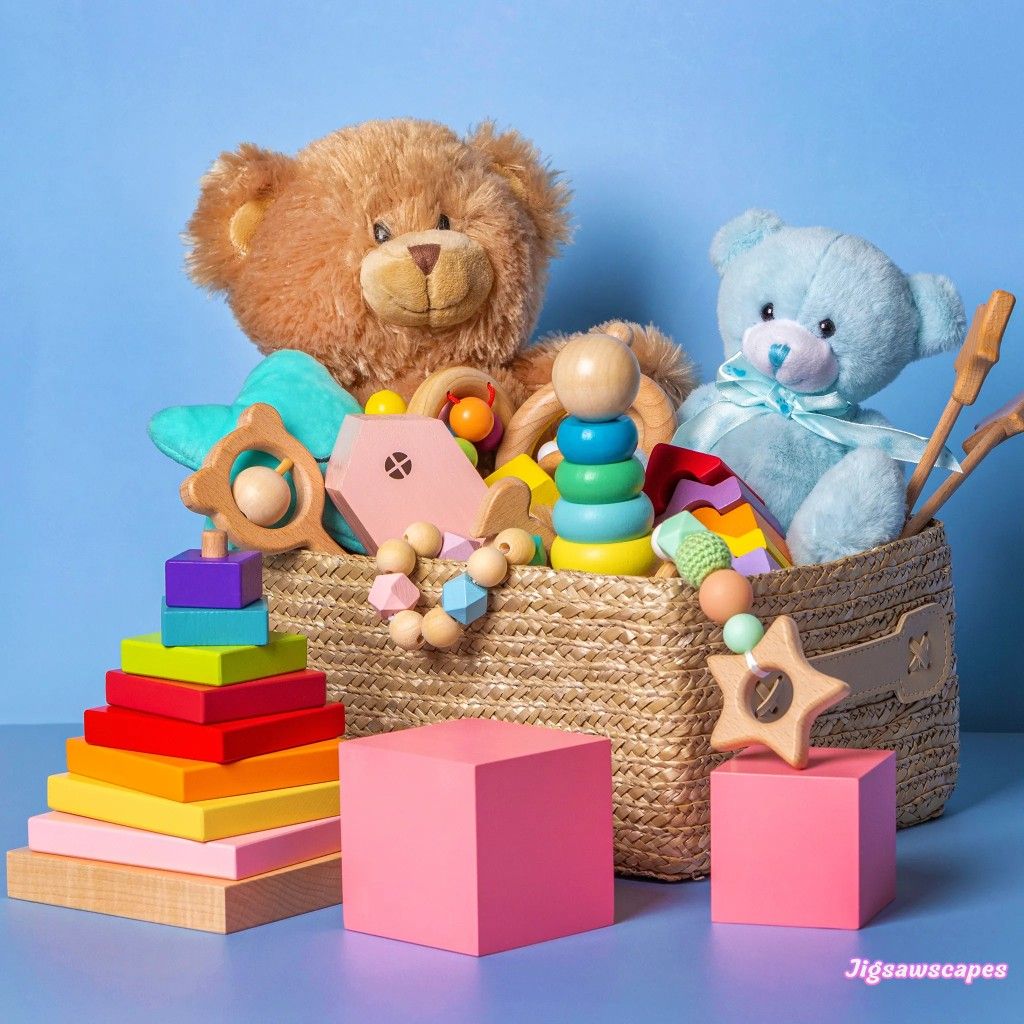
Shape Sorters for Early Learning
Shape sorters are among the first puzzle toys introduced to infants and toddlers. They help children learn basic geometric concepts through hands-on exploration.
Children must determine which shapes fit into specific openings, encouraging logical thinking and experimentation.
This simple activity supports cognitive growth and problem-solving development.
Maze Toys and Logic Challenges
Maze toys challenge children to navigate paths and overcome obstacles. These activities require planning, concentration, and careful decision-making.
As children work through mazes, they learn how to anticipate outcomes and adjust their strategies.
Maze-based challenges can be both entertaining and highly educational.
Puzzle Toys and STEM Learning
Many puzzle toys support STEM education by encouraging logical reasoning and analytical thinking.
Engineering puzzles, construction challenges, and mathematical games introduce scientific concepts through interactive experiences.
These activities help children develop skills that are increasingly valuable in a technology-driven world.
Social Benefits of Puzzle Activities
Puzzle toys can also encourage teamwork and communication. Group puzzle activities require children to share ideas and collaborate toward a common goal.
Working together teaches cooperation, patience, and respect for different perspectives.
These social experiences help children build stronger relationships with peers and family members.
Puzzle Toys for Preschool Children
Preschool children benefit from simple puzzles that focus on colors, shapes, numbers, and basic matching activities.
Age-appropriate challenges help young learners build confidence while introducing important educational concepts.
Success at this stage encourages children to explore more advanced puzzles as they grow.
Puzzle Toys for School-Age Children
Older children often enjoy more complex puzzles that require deeper reasoning and strategic planning.
Logic games, brain teasers, and advanced jigsaw puzzles provide stimulating challenges that keep children engaged.
These activities support academic development while making learning enjoyable.
Reducing Screen Time Through Active Play
Many parents seek alternatives to digital entertainment. Puzzle toys offer engaging activities that encourage active participation without screens.
Children become focused on solving challenges rather than passively consuming content.
This balance helps promote healthier play habits and more meaningful learning experiences.
Choosing the Right Puzzle Toy
Selecting the best puzzle toy depends on a child’s age, interests, and skill level. Challenges should be engaging without becoming overly frustrating.
Starting with simpler puzzles and gradually increasing difficulty helps maintain motivation and confidence.
Quality materials and age-appropriate designs also contribute to a positive experience.
The Long-Term Benefits of Puzzle Toys
The skills developed through puzzle-solving often remain valuable throughout life. Problem-solving, critical thinking, and perseverance are useful in many situations.
Children who regularly engage with puzzles may become more confident learners and independent thinkers.
These benefits extend far beyond childhood and can support future personal and professional success.
Why Puzzle Toys Continue to Be Popular
Puzzle toys have remained popular because they combine learning and entertainment in a highly effective way.
Their versatility allows them to adapt to different ages, interests, and developmental needs.
Whether used at home, in schools, or during family activities, puzzle toys continue to provide meaningful educational experiences.
The Future of Puzzle Toys
Modern puzzle toys are evolving with new designs and technologies. Interactive puzzles, augmented reality experiences, and educational apps are expanding the possibilities.
Despite these innovations, traditional puzzles remain highly valued because of their simplicity and proven developmental benefits.
The future of puzzle toys will likely combine classic learning principles with exciting new technologies.
Conclusion
Puzzle toys are among the most valuable tools for supporting childhood development. They encourage problem-solving, critical thinking, memory improvement, and concentration while providing hours of enjoyable entertainment. From simple shape sorters to advanced logic challenges, puzzle toys help children learn through active participation and discovery.
By combining fun with education, puzzle toys create rewarding experiences that support growth and confidence. Their timeless appeal and developmental benefits ensure that they will remain an important part of childhood learning for generations to come.
